
Local-First AI: Why the Next Big Shift Runs Offline
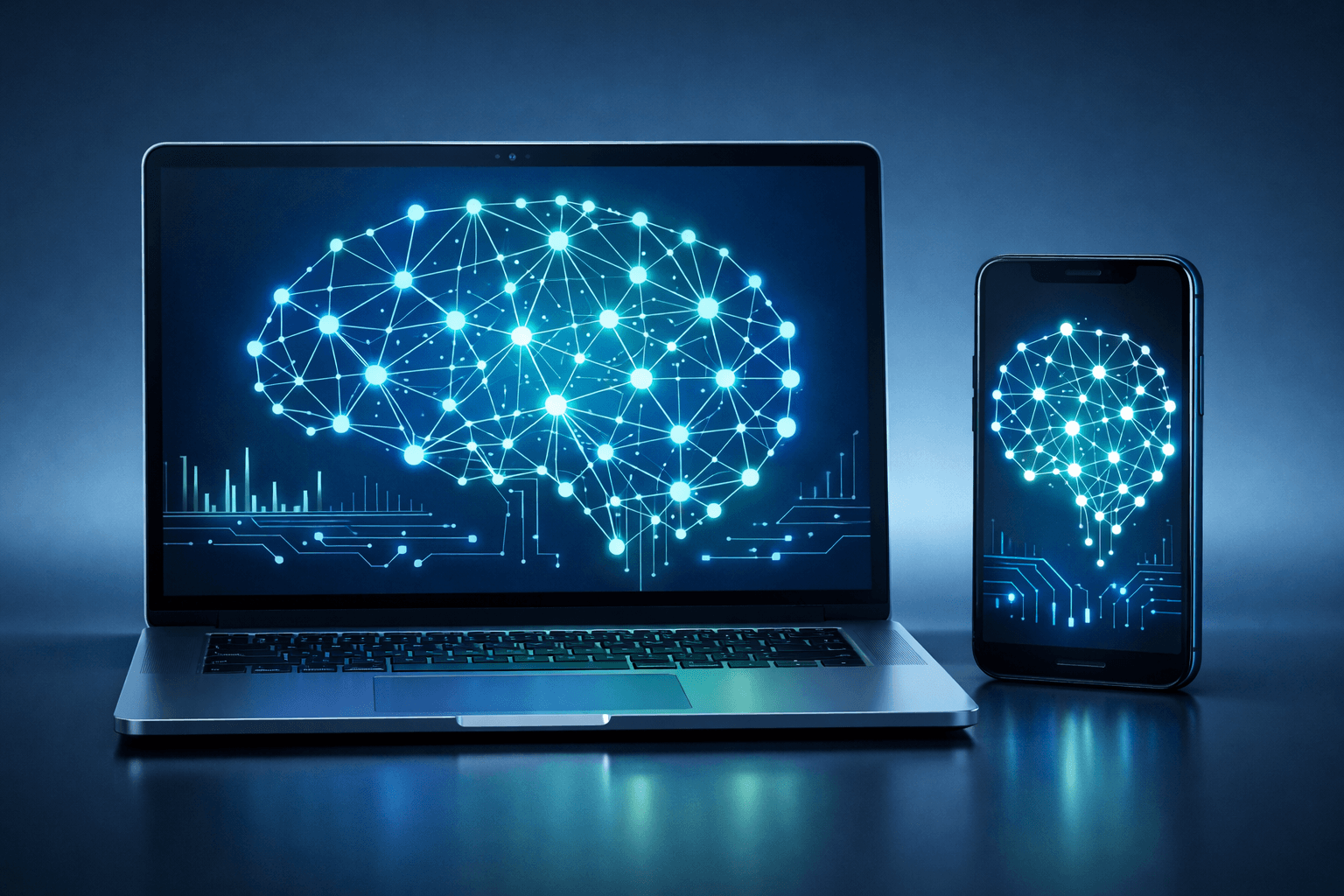
Introduction: The Internet Isn’t the Brain Anymore
For the last decade, AI lived in the cloud.
Every smart feature you used — recommendations, voice assistants, image tools — quietly sent your data somewhere else, waited for a response, and sent it back.
That era is ending.
Right now, AI is moving off the internet and onto your device. Not loudly. Not dramatically. But permanently.
This shift is called local-first AI, and it’s one of the most important technology changes happening today — even though very few people are talking about it.
What Is Local-First AI (In Simple Terms)?
Local-first AI means:
- AI models run directly on your phone or laptop
- No constant cloud requests
- No sending raw data outside your device
- Faster responses, more privacy, less dependency
Your device becomes the decision-maker, not just a screen.
This isn’t theory anymore. It’s already happening.
Why This Shift Is Happening Now
Three forces collided recently:
1. Hardware Finally Caught Up
Modern devices now have:
- Dedicated AI chips
- Neural processing units (NPUs)
- Better power efficiency
What once required a data center can now run in your pocket.
2. Privacy Pressure Is Real
Users are tired of:
- Data leaks
- Silent tracking
- “We store your data securely” promises
Local AI removes the problem instead of explaining it.
3. Latency Is the New Enemy
Waiting 2–3 seconds feels slow now.
Offline AI responds instantly — no network, no delay.
Why Big Companies Are Quiet About It
Local-first AI reduces:
- Cloud dependency
- Server costs
- Centralized control
That’s great for users — but uncomfortable for businesses built on data collection.
So instead of headlines, this shift is happening through:
- Silent OS updates
- “Performance improvements”
- “Enhanced privacy features”
No big announcements. Just slow replacement.
What Changes for Everyday Users?
You may already notice subtle differences:
- Features working in airplane mode
- Smart search without internet
- Auto-corrections improving without updates
- Personalization that doesn’t sync online
The experience feels smoother — but you don’t know why.
That’s the point.
The Developer Perspective: A New Way to Build
For developers, this shift changes everything:
Before:
- Build → deploy → scale servers
- Optimize for bandwidth
- Handle user data responsibly (or promise to)
Now:
- Optimize for device limits
- Smaller, smarter models
- Privacy-by-default architecture
The challenge isn’t scale anymore.
It’s efficiency.
The Hidden Trade-Offs Nobody Talks About
Local-first AI isn’t perfect.
It introduces new problems:
- Limited compute compared to cloud
- Harder model updates
- Device compatibility issues
- Debugging becomes complex
But here’s the key difference:
These problems affect developers, not users.
And modern tech always chooses user comfort over developer convenience.
Why This Shift Is Bigger Than It Looks
Local-first AI changes power dynamics.
- Users regain control
- Devices become smarter, not just connected
- Internet outages matter less
- Data ownership becomes practical, not theoretical
This is how technology quietly matures — by becoming invisible.
"The most powerful technology is the one you forget is there."
What This Means for the Future
In the next few years:
- Apps will work offline by default
- AI features will feel “built-in,” not added
- Privacy won’t be a feature — it’ll be expected
- Cloud AI will be reserved for heavy tasks only
The cloud won’t disappear.
But it won’t be the brain anymore.
Final Thoughts: The Quiet Revolution
Every major tech shift starts loudly — and ends silently.
Local-first AI isn’t trying to impress you. It’s trying to disappear into your daily life.
And when technology becomes invisible, it usually means it has finally succeeded.
If this is your first blog post, remember this: You didn’t write about hype. You wrote about direction.
That’s how real tech stories begin.
Stevan Pinto
Full-stack developer passionate about building scalable web apps and exploring new technologies.